01
Agree what the property must be ready for
Post-construction deep cleaning in Jeddah should begin with the handover condition the owner expects. An office awaiting furniture delivery, a fitted retail unit awaiting stock and a commercial building about to receive tenants have different acceptance points. Confirm whether the team is removing construction residues, preparing accessible surfaces for occupation or carrying out a final presentation clean after snagging. These stages can require separate visits.
Record the property, floor and room references, expected access time, planned occupation and person authorised to accept each area. Include the surfaces and fixtures in scope and the items excluded. A useful specification describes the result to be inspected; a request to make everything spotless leaves both the contractor and the employer guessing.
02
Release the work area before cleaning starts
Have the construction or fit-out lead confirm which zones are ready. Ongoing drilling, cutting, painting or ceiling work can recontaminate an area immediately after it is cleaned. Separate unfinished zones from released zones and agree how follow-on trades will protect completed work. The cleaning supervisor should receive current access instructions and information about any surface that is still curing or protected.
Confirm reliable water, safe electrical supply, lighting, suitable ventilation, welfare facilities and a waste route. Identify restricted plant rooms and equipment that only appointed specialists may access. General cleaning staff should not remove protection, energise equipment or open technical systems without the responsible contractor’s authorisation.
03
Inspect finishes before choosing a method
Create a surface register covering stone, porcelain or ceramic tile, resilient flooring, carpet, timber, coated metal, painted walls and glass. Record the finish manufacturer’s instructions and approved products where available. Classify visible marks as loose dust, adhesive residue, paint, grout haze or possible damage. A stain and a scratch are different problems; repeated scrubbing will not repair a defect.
Use a discreet trial area and obtain approval before applying a product widely. The Tile Council of North America explains that grout residue can have different causes and that acidic treatments may damage grout or adjoining materials. Do not turn an example product into a universal prescription. Follow the actual product and surface instructions, and refer uncertain residues to the installer or manufacturer.
04
Remove debris without redistributing fine dust
Arrange bulk waste removal before the detailed clean. Distinguish packaging and ordinary debris from materials requiring the construction contractor’s specialist handling. Do not ask cleaners to identify unknown hazardous material by appearance or to move it into ordinary waste.
For fine construction dust, the UK Health and Safety Executive advises suitable vacuum or controlled wet methods in place of routine dry sweeping. This is technical dust-control guidance, not a statement of Saudi regulatory requirements. The responsible site safety lead should select the task controls and equipment for the actual dust and work area. Do not blow dust from ledges into occupied rooms or rely on a household vacuum for a task it was not designed to handle.
05
Sequence rooms so the final floor clean stays final
Plan the accessible high surfaces and fixtures before the final floor pass. Work through each released zone systematically: accessible ledges, frames, fittings, counters and furniture in scope, then the floor and threshold. Keep the tools and cloths appropriate to each area. A washroom cloth should not migrate to an office desk simply because both surfaces look clean.
Record who may remove films or temporary coverings. Some protection remains necessary until the owner’s final inspection or until deliveries finish. Remove it only at the agreed point, check the exposed surface and report trapped residue or damage. Protect completed zones from trolley marks and returning trades with the site’s approved method.
06
Office handover inspection
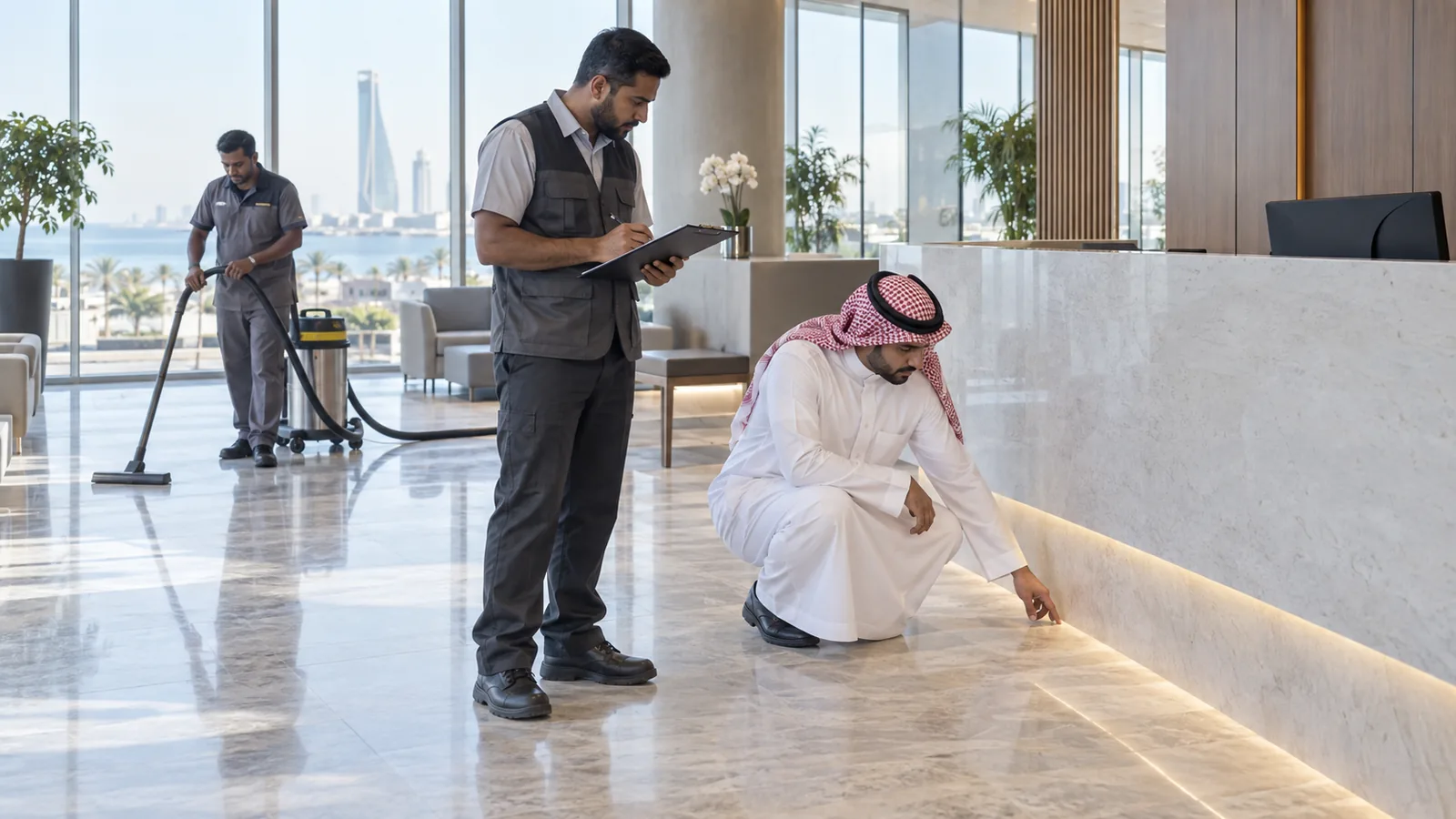
Inspect the reception counter, meeting rooms, workstations where installed, skirting, door furniture, partitions and accessible window frames. Check corners and cable-access covers externally without opening electrical systems. Include cupboards only where the agreed scope authorises access and their contents have been removed or protected.
Ask the facilities representative to inspect under normal operating lighting. A glossy floor can appear clean in one direction while streaks or residue remain visible from another. Check carpet edges and thresholds, confirm accessible surfaces are free from loose dust, and record items requiring installer attention. Cleaning acceptance does not substitute for electrical, mechanical or fire-system commissioning.
- Reception and desks: no agreed removable residue or loose dust on accessible surfaces.
- Meeting rooms: doors, handles, partitions and floor edges checked.
- Storage: accessible empty shelving inspected where included.
- Facilities: visible vents cleaned externally only; specialist internal servicing recorded separately.
07
Retail and commercial property inspection
For retail, agree the order of fixture cleaning, glazing, display installation and stock delivery. Inspect customer-facing glass from both accessible sides and identify scratches before cleaners begin. Confirm whether signage, high-level fixtures and external glazing need a separately authorised specialist method.
For shared commercial areas, inspect lift lobbies, corridors, accessible stairs, washrooms, entrance zones and waste holding areas. Preserve safe public access and coordinate wet work with the property manager. A common-area clean should not be treated as acceptance of every tenant unit: keep the inspection record tied to the exact area released.
- Retail: counters, display fittings, accessible glazing and entry thresholds.
- Shared spaces: floor edges, stair landings, handrails and door furniture.
- Washrooms: approved cleaning procedure, fixtures, mirrors and consumable responsibility.
- External access: entrance condition and waste route checked within the agreed boundary.
08
Keep a defect log separate from the cleaning list
When a mark remains after the approved method, record the location, material, observation and action taken. Escalate to the owner’s representative rather than increasing chemical strength or scraping blindly. Keep construction defects, incomplete installations and cleaning items in separate columns so the appropriate contractor receives each task.
Use photographs only under the property’s permission and information-handling rules. Tie each photograph to a room reference and date. Avoid including tenant documents, security details or personal information. The handover record should explain what was inspected and who will close the remaining item; a folder of unlabeled photographs does not establish acceptance.
09
Make final acceptance a room-by-room decision
Arrange a joint inspection after the final clean and before the area is opened or stocked where feasible. Use the agreed checklist, confirm exceptions and record the acceptance decision for each zone. If further snagging is scheduled, state whether another clean is included and which work will trigger it.
Document the released area, inspection date, employer representative, cleaning supervisor, completed items, unresolved observations and return visit conditions. Give the facilities team the cleaning methods and approved product information needed for subsequent maintenance. A signed cleaning record covers the agreed cleaning scope; it does not certify the entire property as defect-free or ready for every operational use.
10
Employer handover checklist
- Scope: property, zones, accessible surfaces, fixtures and exclusions confirmed.
- Readiness: trades finished in released zones; utilities and safe access available.
- Materials: surface instructions and trial approval recorded.
- Dust: task-specific control method and suitable equipment agreed.
- Waste: segregation, removal responsibility and collection route confirmed.
- Protection: removal authority and completed-area protection defined.
- Inspection: zone checklist, defect log and acceptance contacts ready.
- Return work: recontamination, snagging visits and additional scope handled through an agreed change process.
11
Prepare a useful cleaning workforce request
Send the property type, location, released floor area, surface register, site photographs where permitted, access windows and handover date. Add the task list, equipment responsibility, supervision, waste arrangement and inspection process. Ask for the proposed phase plan and coverage against that scope.
Do not assume one fixed headcount or completion time applies to all properties of the same size. Residue type, finish sensitivity, restricted access, ongoing trades and the amount of detail work change the effort. Agree the milestones and rework conditions before mobilisation, then review progress against the rooms actually released.