01
Define the cleaning scope
Provide the area, material, previous coating or treatment information and photographs of wear, stains, cracks and damaged grout. Separate cleaning from restoration and repair. An existing structural or material defect can affect the achievable finish and should be recorded before treatment.
- Floor areas classified by actual material and condition
- Polishing or restoration method agreed after assessment
- Tile and grout cleaning boundaries specified by area
02
Inspect the site and plan access
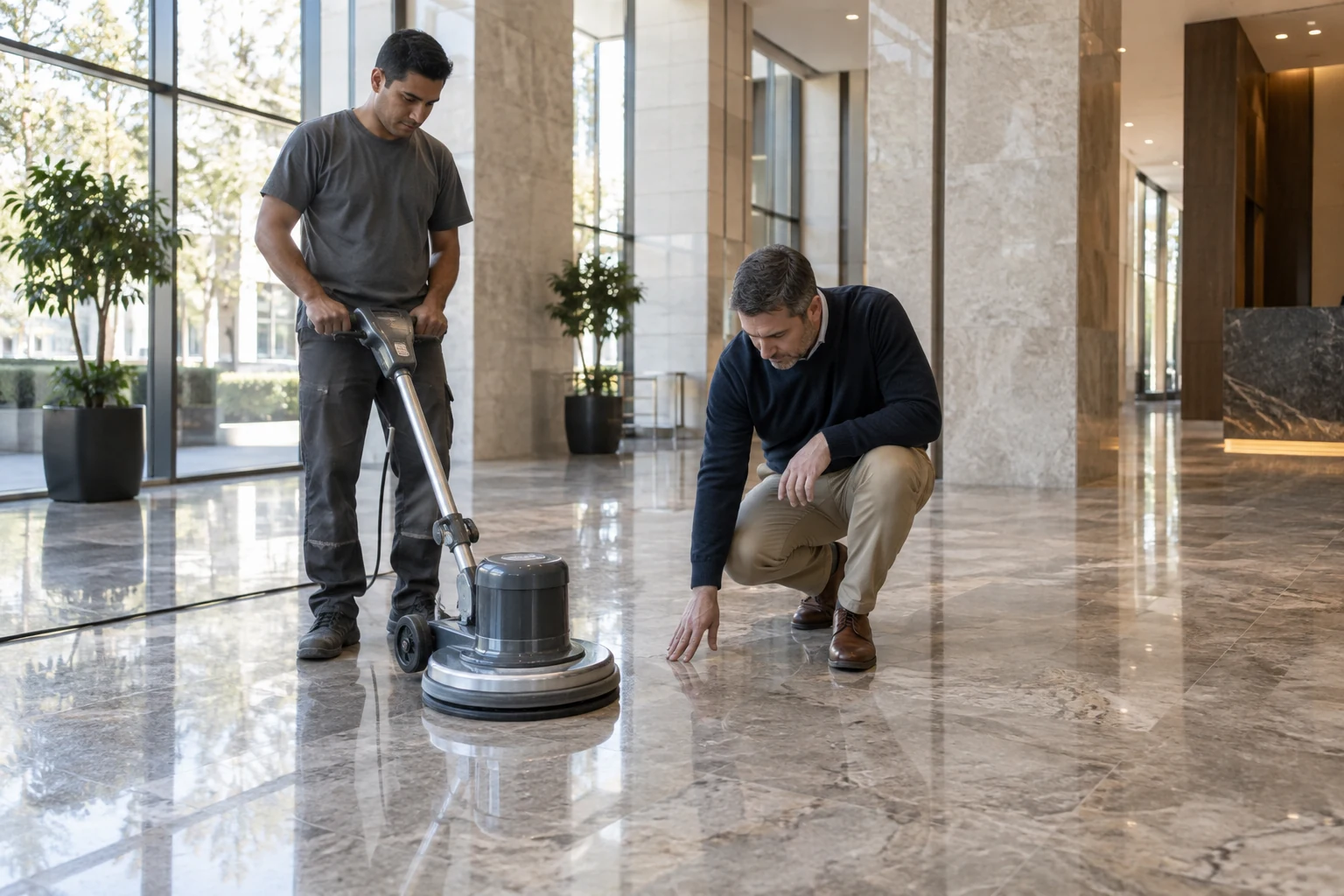
Where required, agree a test area and review its result before extending the method. Identify the finish expected and who approves it. Include furniture movement, adjacent-surface protection and the permitted drying or curing window in the plan.
- Material, finish, coating and previous treatments
- Wear, cracking, staining and damaged grout
- Test area, curing or drying window and public access
03
Agree equipment and treatment
Equipment, pads, products and treatment stages are selected for the inspected material. The proposal should explain the included treatment and any dependencies. Tile replacement, structural repair and waterproofing should not be assumed included in a floor-cleaning or polishing quotation.
- Material-appropriate floor equipment and pads
- Products and treatment stages agreed for the inspected finish
- Protection and drying or curing arrangements
04
Confirm exclusions before approval
Resolve the following boundaries during scope review and record them in the quotation. They are points to agree for the actual site, rather than a substitute for the final contract terms.
- Universal suitability of polishing for every floor
- Tile replacement, structural repair and waterproofing
- Guaranteed restoration of damaged material to new condition
05
Prepare the quotation inputs
Send the location and task information below with the proposed work window. The reviewed quotation should identify included areas, equipment and supervision, access dependencies, commercial terms and information still needed. Prices and completion dates are agreed from the inspected scope.
- Floor area and material identification
- Photos of wear and previous-treatment information
- Desired finish and acceptable test area
- Furniture movement and reopening window
06
Inspect completion and record exceptions
At completion, compare the agreed finish with the approved test area where applicable. Record remaining defects and areas excluded or awaiting another intervention. Hand over the agreed care and reopening instructions without promising that damaged flooring will return to new condition.
- Approved test-area result where required
- Agreed finish and visible-condition comparison
- Remaining defects and care instructions recorded
07
Define floor-team duties by material and treatment stage
Give each floor area a reference linked to its material, inspected condition and reviewed treatment. Separate preparation, agreed cleaning or polishing stages, supervision and employer inspection in the workforce brief. Identify who reviews a test area where required. This lets the proposed team explain its duties without treating every floor finish as one interchangeable task.
Compare the proposed workers’ relevant task experience with the assigned equipment and approved method. Keep unresolved material information or a pending test-area decision visible in the response. A generic floor-cleaning title does not demonstrate suitability for every restoration task. Confirm the actual boundary between cleaning, treatment and separately scoped repair before agreeing the allocation.
08
Sequence deployment around area release and reopening
Agree the work-area sequence with the building representative responsible for occupant access and furniture movement. Record which areas are released, which remain in use and who receives changes to the schedule. Connect deployment to the reviewed treatment stages and drying or curing arrangements; do not infer a universal reopening time from the total floor area.
When the employer changes the finish requirement or access window, identify the affected area references and approval needed. Keep an area awaiting a test result separate from a stage completed by the team. Review revised manpower against ready areas, equipment and the permitted window instead of assuming extra workers will resolve an approval dependency.
09
Hand over floor status against the agreed finish record
Use area references to connect the supervisor’s task record with the employer’s finish inspection. Identify work completed, areas awaiting review and existing defects that remain outside the treatment scope. Where a test area was agreed, retain the relevant acceptance record so the receiving contact can compare the actual result with the reviewed requirement.
For subsequent work, carry forward unresolved areas and the owner of care or reopening instructions. Keep further cleaning or polishing distinguishable from tile replacement, structural repair and waterproofing. Agree revised tasks and workforce arrangements before another deployment, using the current condition and treatment record rather than assuming the earlier brief covers every follow-up request.