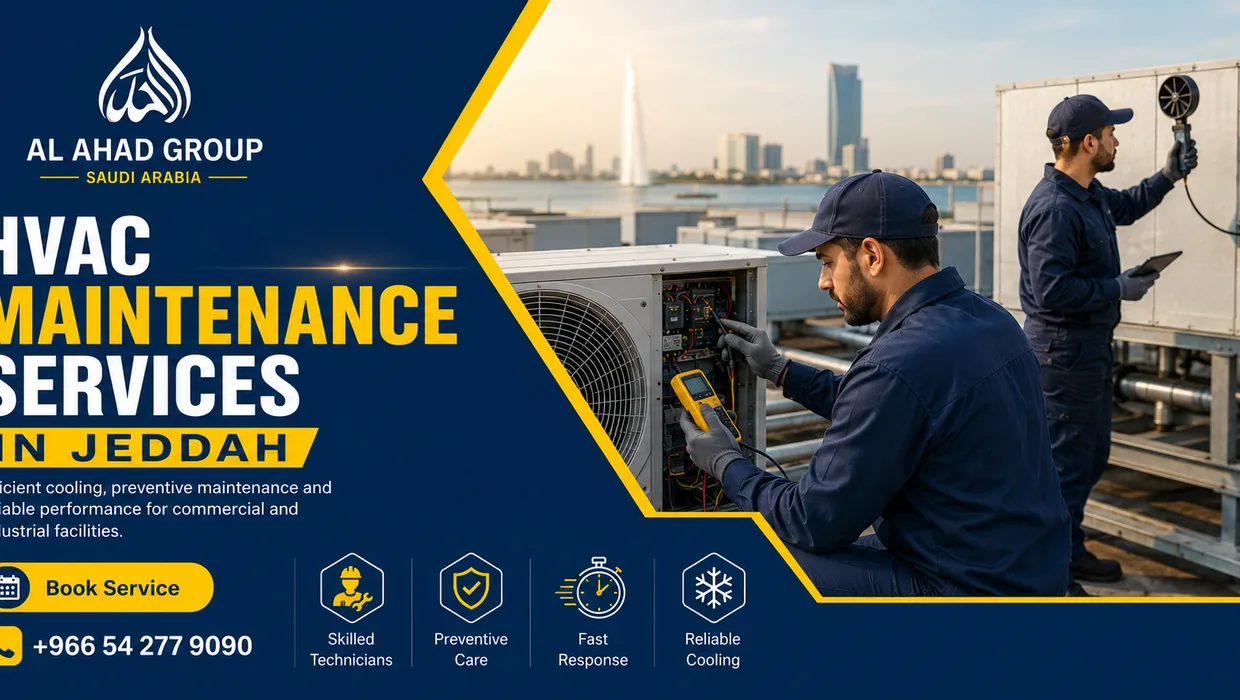
Service scope
State whether the site needs HVAC technicians, MEP support, electricians, plumbers, AC maintenance workers, general maintenance crews or mixed technical cover.
 AL AHAD GROUP
Skilled manpower requests in Jeddah should separate HVAC, MEP, electrical, plumbing and maintenance roles before employers compare suppliers or request quotations.
This search usually comes from facility teams, contractors or operations managers who need trade-specific manpower rather than general labour. The pressure is often tied to maintenance continuity, project schedules, or building-system support.
That makes the decision more precise than a broad staffing search. The employer typically needs role-by-role clarity, site access planning and a practical response support for technical deployment.
Skilled manpower comparisons improve when the trade mix, site conditions and supervision model are visible from the start.
State whether the site needs HVAC technicians, MEP support, electricians, plumbers, AC maintenance workers, general maintenance crews or mixed technical cover.
Confirm trade category, certificate or experience level, quantity per shift, supervisor requirement and whether the work is preventive, corrective or project-based.
Share plant-room access, work permits, service hours, building type, customer-sensitive zones and whether the teams move across multiple sites.
Define monthly or shutdown duration, expected start date, workfront sequence, tools responsibility and escalation contact for site coordination.
Clarify whether the technical team needs relief coverage, emergency backup, rapid replacement or specialist standby support.
Include LOTO, permit-to-work, confined-space, roof access, hot-work or customer safety requirements where relevant.
Technicians and helpers for AC maintenance, chilled-water systems, air handling units and preventive schedules.
MEP manpower for building systems, fit-out tasks, repairs and handover support.
Trade workers for maintenance, snag clearing, service-call work and contractor-led requirements.
Combined technical crews where one site needs several trades under one supervisor support.
Skilled manpower demand is usually strongest where system uptime, permit access and skilled trade coordination affect the operating result directly.
Sites often need HVAC and MEP support tied to tenancy, service windows and building uptime.
Guest-sensitive sites need trade support that fits service hours and presentation standards.
Skilled manpower can support electrical, MEP and maintenance requirements around operations-heavy facilities.
Contractors often need skilled manpower that aligns with program deadlines, trade sequencing and handover phases.
Send the actual requirement, not only the service term. That means worker mix, service scope, location, shift pattern and expected commercial outcome.
Cleaning, warehouse, technical, hospitality and maintenance manpower should be broken out clearly so the support model is commercially usable.
Employers usually decide faster when start date, contract duration, replacement timing and supervisor coverage are visible before final review.
Use one clear request support for pricing, mobilization and service continuity so buyer teams, operations and site teams stay aligned.
Skilled manpower pages need deeper trade clarity because generic manpower language often hides the real risk in the requirement.
A request that says technicians without role separation is rarely enough for a practical review.
Roof access, plant-room access or hot-work controls can change manpower readiness significantly.
Preventive maintenance, breakdown support and project work do not follow the same manpower logic.
Critical systems often need standby or replacement expectations that should be visible before award.
Use these Jeddah proof services to compare technician manpower, HVAC and MEP support, and project-linked technical coverage.
It usually includes HVAC technicians, MEP workers, electricians, plumbers, AC support teams and maintenance manpower.
Because each trade may need different experience levels, access rules, supervision and deployment timing.
Yes, but the brief should show whether the work is ongoing facility support, shutdown work or project-driven mobilization.
Trade categories, quantity, site conditions, permit needs, shift timing and contract duration matter most.
Because system-dependent sites often cannot absorb downtime caused by absence or delayed trade replacement.
Send the service scope, worker categories, headcount, site location, shift timing, contract duration, start date, replacement support and safety requirements so the AL AHAD GROUP team can review the request clearly.